
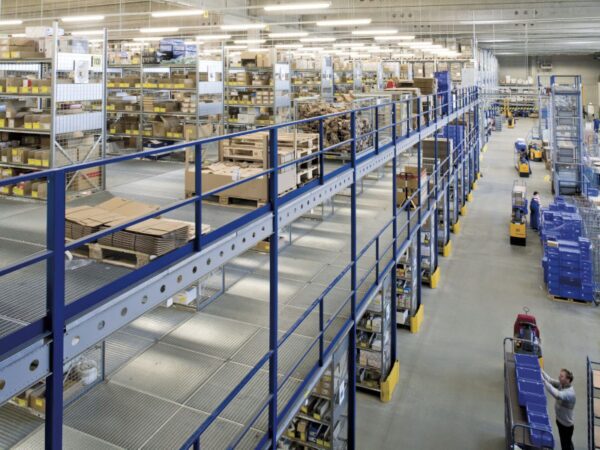
Steel Mezzanine Floor
If you’re running a warehouse, factory, showroom, or retail space in Dubai, Abu Dhabi, Sharjah, or anywhere else in the UAE, you already know the problem: floor space is expensive, and there’s never quite enough of it. That’s exactly why so many businesses across the country are turning to steel structure mezzanine floors. Instead of relocating to a bigger facility or paying for extra land, you simply build upward and unlock a whole new level of usable space within your existing footprint.
This guide walks through everything you need to know — what mezzanine floors are, why steel is the material of choice in the UAE’s climate and industrial landscape, how the design and installation process actually works, and what to look for when choosing a supplier.
What Is a Steel Mezzanine Floor?
A steel mezzanine floor is an intermediate platform built between the main floor and the ceiling of a building. Think of it as a partial second level — it doesn’t span the entire footprint of the building (which would make it a full second story), but it adds significant usable area for storage, offices, staff facilities, or additional retail display.
A Steel Mezzanine Floor uses structural steel columns, beams, and decking as the primary framework, rather than concrete or timber. This is the preferred method for commercial and industrial mezzanines because steel offers a rare combination of strength, speed of installation, and design flexibility that other materials simply can’t match at the same cost.
Why Steel Is the Right Choice for UAE Facilities
The UAE’s business environment has a few characteristics that make steel mezzanines particularly well suited to local conditions.
Heat and humidity resistance. Unlike timber, steel doesn’t warp, rot, or degrade under the region’s intense heat and coastal humidity. A properly coated steel frame will hold its structural integrity for decades without the maintenance headaches wood or lower-grade materials bring.
Fast turnaround. Steel components are typically fabricated off-site and bolted together on location, which means far less disruption to ongoing operations. For businesses that can’t afford extended downtime, this is often the deciding factor.
High load capacity. Warehouses storing heavy inventory, manufacturing equipment, or racking systems need a mezzanine that can handle serious weight. Steel structures are engineered to support heavy point loads and distributed loads well beyond what most alternative materials can achieve.
Space efficiency. Steel columns and beams take up far less floor area than masonry or concrete supports, meaning more of your valuable ground-floor space stays usable.
Cost-effectiveness over the building’s lifetime. While the upfront cost of steel can be comparable to other materials, the low maintenance requirements and long service life make it more economical over 15, 20, or 30 years.
Common Uses for Steel Mezzanine Floor in the UAE
- Warehousing and logistics — additional storage above existing racking, or dedicated pick-and-pack zones
- Manufacturing facilities — extra floor area for equipment, control rooms, or staff areas without expanding the building footprint
- Retail and showrooms — elevated display areas, VIP lounges, or additional selling space
- Offices within industrial units — a common setup in Dubai’s industrial zones like Al Quoz, Jebel Ali, and DIP, where businesses need office space above their warehouse floor
- Labor accommodation and staff facilities — additional rest areas or amenity space within existing buildings
- Steel Mezzanine Floor using for double your storages. contact us today 0544812988 , Email: [email protected], [email protected], @moazzam367
The Design Process
A good Steel Mezzanine Floor supplier won’t just hand you a generic structure — the design should be built around your specific building, load requirements, and intended use. Here’s roughly how the process typically unfolds:
1. Site survey and requirement assessment. The supplier visits your facility (or reviews architectural drawings) to understand ceiling height, existing column layout, floor loading capacity, and any obstructions like sprinkler systems, ductwork, or lighting.
2. Load calculation and structural engineering. Based on intended use — whether that’s static storage, racking, machinery, or foot traffic — engineers calculate the required beam spans, column spacing, and decking specifications.
3. Layout and 3D design. Most reputable suppliers provide detailed drawings or 3D models so you can visualize staircase placement, safety railing, and how the mezzanine integrates with your existing operations before any steel is fabricated.
4. Approvals and compliance. In the UAE, mezzanine structures typically need approval from the relevant municipality or free zone authority (such as Dubai Municipality, Trakhees, or Abu Dhabi’s Department of Municipalities and Transport), along with civil defense sign-off for fire safety compliance. A supplier familiar with local regulations will handle this on your behalf.
5. Fabrication. Steel components are cut, welded, and treated (usually hot-dip galvanized or painted for corrosion resistance) at the fabrication facility.
6. Installation. The structure is assembled on-site, typically with minimal disruption since most of the heavy work has already happened off-site.
Key Design Considerations
- Load rating — office/light storage use vs. heavy racking or machinery changes the entire structural specification
- Staircase and access points — placement affects workflow and must meet fire escape regulations
- Safety railing and edge protection — mandatory under UAE civil defense codes
- Decking material — steel checker plate, plywood, or chipboard depending on use case
- Fire rating — some applications require fire-rated decking or cladding
- Future flexibility — bolted (rather than welded) structures can be dismantled or reconfigured if your needs change
Choosing a Steel Mezzanine Floor Supplier in the UAE
Not all suppliers are equal, and given that this is a structural addition to your building, the stakes of getting it wrong are high. Here’s what to look for:
- Local experience and portfolio — ask to see completed projects in similar facilities (warehouses, factories, showrooms) within the UAE
- In-house engineering capability — suppliers with their own structural engineers can design and adjust on the fly rather than relying on slow back-and-forth with third parties
- Compliance knowledge — familiarity with Dubai Municipality, Trakhees, ADM, and civil defense approval processes saves significant time and prevents costly rework
- Fabrication quality — ask about steel grade, coating process (galvanization vs. paint), and welding standards
- Turnkey service — the best suppliers handle design, approval, fabrication, and installation as one seamless package rather than passing you between contractors
- After-sales support — warranties, maintenance advice, and responsiveness if any adjustments are needed post-installation
Frequently Asked Questions
How long does installation take? Most standard mezzanine projects, once approved and fabricated, can be installed within a few days to a couple of weeks depending on size and complexity. Fabrication lead time usually adds a few more weeks.
Do I need government approval for a Steel Mezzanine Floor in the UAE? Generally, yes. Most municipalities and free zones require structural drawings to be submitted and approved before installation, along with civil defense clearance for fire safety.
Can a mezzanine floor be removed or relocated later? If it’s bolted rather than welded, yes — many steel mezzanines are designed to be fully demountable and reusable elsewhere.
What’s the typical cost range? Costs vary widely based on load requirements, size, finishing, and site conditions, so it’s best to get a site-specific quote rather than relying on a generic per-square-meter figure.
Final Thoughts
A steel mezzanine floor is one of the most practical ways to expand usable space in the UAE without the cost and disruption of relocating or extending your building. The key to a successful project is working with a supplier who understands both the structural engineering and the local regulatory landscape — from Dubai Municipality approvals to civil defense compliance — so the finished structure is safe, compliant, and built to last.
If you’re evaluating suppliers, ask for a site visit, a clear design proposal, and references from similar completed projects before signing off. A well-designed Steel Mezzanine Floor should feel like a natural extension of your facility, not an afterthought bolted on top of it.