Construction Fence Manufacturer in Dubai, Sharjah
When a construction project breaks ground in the UAE, one of the first calls a site manager makes is to a fencing manufacturer, not a middleman, not a reseller, but someone who actually makes the panels. There is a real difference between buying from a company that manufactures its own fencing locally and buying from one that simply imports and marks up stock from somewhere else. If you are looking into a construction fence manufacturer in Dubai or Sharjah, understanding that difference can save you a surprising amount of money and hassle over the life of a project.
Why Construction Fence Manufacturer in Dubai Actually Matters
A lot of Construction Fence Manufacturer in Dubai advertise as if they produce their own panels, but many are really just distributors sourcing from third parties. That matters because a true manufacturer controls the entire process, from raw material sourcing to welding, galvanizing, coating, and cutting to size. This control translates into a few very practical advantages for contractors and developers:
- Faster turnaround on large or urgent orders, since production is not dependent on someone else’s factory schedule
- Custom panel sizes and configurations built to fit irregular site boundaries
- More competitive pricing, since there is no middleman markup
- Better quality control, since the manufacturer can fix issues at the source instead of relying on a supplier chain
- Easier warranty and replacement support, since the company that made the fence is also the one servicing it
For large-scale developments in Dubai or industrial projects in Sharjah, these differences add up quickly across hundreds or thousands of linear meters of fencing.
Materials and Manufacturing Process
The UAE’s climate is genuinely tough on outdoor materials. Intense heat, high humidity near the coast, and periodic sandstorms all accelerate wear on lower-grade metal and plastic products. A serious manufacturer designs specifically around these conditions rather than using generic specifications meant for milder climates.
Typical production involves galvanized steel wire or sheet, which resists rust far longer than untreated steel. Panels are often powder-coated for additional weather resistance and a cleaner finish, since many hoarding fences double as advertising or branding surfaces on visible sites. Frames are usually built from square or round steel tubing, welded rather than bolted where possible, since welded joints hold up better under repeated wind loading over months of site use.
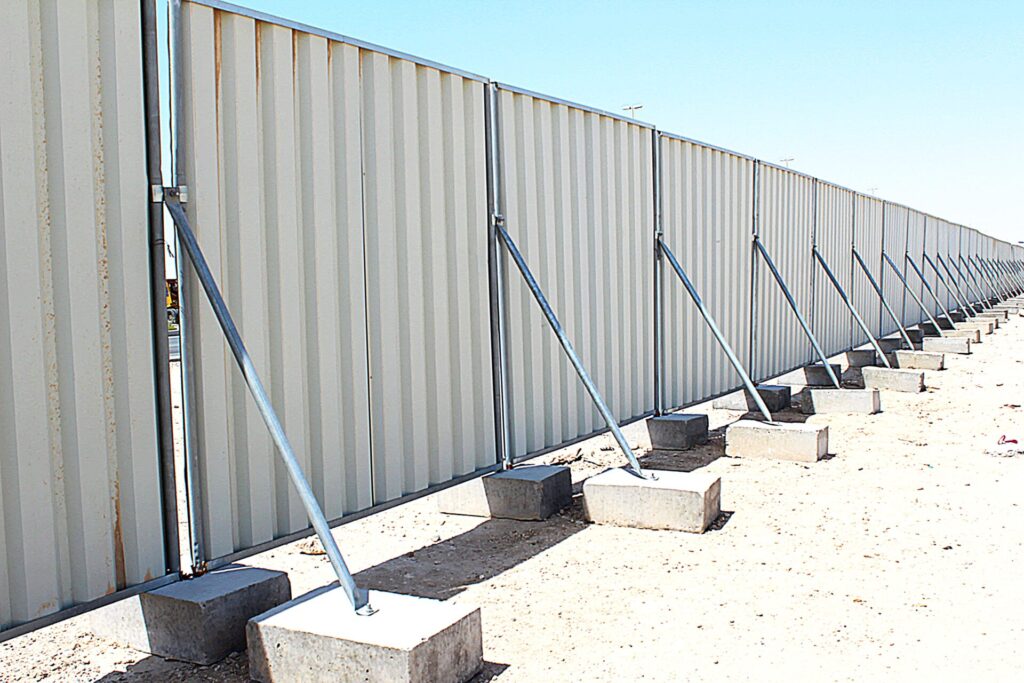
Manufacturers who also produce their own fixing systems, like precast concrete feet, sandbag-weighted bases, or ground-driven posts, give contractors more flexibility depending on ground conditions, since not every site allows for posts to be driven into the earth.
Common Products from a Local Construction Fence Manufacturer in Dubai
A Construction Fence Manufacturer in Dubai Sharjah’s construction sector typically produces a fairly wide catalog, since project types vary so much across the two emirates:
Temporary chain-link fencing remains the most common choice for general site perimeters, largely because it is quick to install, easy to move, and inexpensive to replace if damaged.
Hoarding panels are solid, often corrugated or flat-sheet barriers used where visual screening or branding matters, common in Dubai’s more visible commercial and residential zones.
Palisade and picket fencing suits sites needing a longer-term, higher-security boundary, particularly for industrial or logistics facilities common in Sharjah.
Windbreak mesh offers a middle ground, blocking dust while still letting wind pass through, useful on larger open sites where solid hoarding would create excessive wind loading.
Pedestrian barriers and crowd control fencing round out the catalog for smaller-scale or temporary needs, such as event zones adjacent to active construction.
Regulatory Familiarity Across Both Emirates
Dubai Municipality and Trakhees each have their own requirements around fence height, hoarding graphics, and gate placement, particularly in high-density areas. Sharjah Municipality tends to focus more on dust containment and boundary security given the emirate’s mix of industrial and residential growth. A manufacturer that regularly supplies both emirates will already understand these differences, which can spare contractors from failed inspections or last-minute rework.
Local Manufacturing Means Local Responsiveness
Perhaps the most underrated benefit of working with a manufacturer based in the UAE, rather than one relying on imported stock, is simple responsiveness. Site conditions change. Plans shift. A gate might need to be relocated, a stretch of fencing might get damaged by a delivery truck, or a project might expand its footprint mid-build. A local manufacturer with its own production line can typically respond to these changes within days rather than weeks, since there is no shipping delay or overseas order queue involved.
Choosing the Right Manufacturing Partner
Before committing to a Construction Fence Manufacturer in Dubai, it is worth asking direct questions: Do they produce panels in-house or outsource production? What lead times can they realistically commit to? Do they understand the specific municipality requirements for your project’s location? Can they support both Dubai and Sharjah sites without added delays?
A manufacturer who can answer these clearly, and who is willing to visit the site or review drawings before quoting, is usually a strong sign of a company built for long-term contractor relationships rather than one-off sales. For any project where fencing needs might evolve, that kind of manufacturing flexibility is worth more than a slightly lower quote from an unfamiliar supplier.