
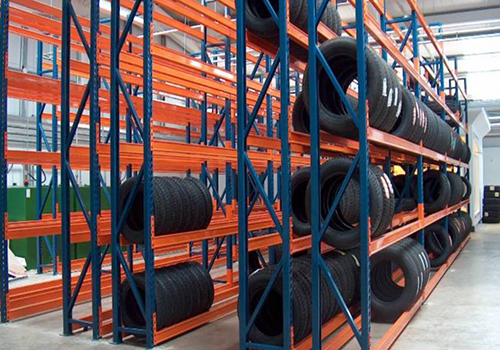
Tyre Racking System in Sharjah is one of those operational challenges that looks simple until you’re actually dealing with it. Bulky, awkwardly shaped, and often stacked in ways that waste space or create safety hazards, tyres can quickly turn a warehouse or workshop into a cluttered, inefficient mess. For businesses across Sharjah — from tyre retailers and auto workshops to logistics companies and fleet operators — a properly designed tyre racking system solves this problem at its root, freeing up floor space while keeping stock organized, accessible, and protected.
Why Sharjah Businesses Need Purpose-Built Tyre Racking
Tyre Racking System in Sharjah has long been a key player in the UAE’s automotive and industrial trade, home to a dense concentration of workshops, spare parts dealers, and distribution hubs, particularly around areas like Industrial Area and the Sajaa and Hamriyah free zones. With that concentration of activity comes intense pressure on storage space. Tyres stacked directly on the floor or piled without structure not only waste valuable square footage, they also degrade faster, become harder to inventory, and pose real safety risks when stacks become unstable.
A dedicated Tyre Racking System in Sharjah addresses all of these issues at once. By storing tyres vertically or in structured horizontal rows, businesses can dramatically increase their storage density, sometimes doubling or tripling capacity within the same footprint. This matters enormously in Sharjah, where warehouse and workshop rental costs make every square meter count.
Key Benefits of Tyre Racking System in Sharjah
Maximized space utilization: Vertical racking takes advantage of ceiling height rather than floor area, allowing far more tyres to be stored in the same physical space compared to flat stacking.
Improved organization and accessibility: Racks allow Tyre Racking System in Sharjah to be sorted by size, brand, or type, making it much faster for staff to locate and retrieve specific stock — a major time-saver during busy periods.
Reduced tyre damage: Proper racking prevents the flat-spotting, deformation, and pressure damage that can occur when tyres are stacked directly on top of each other for extended periods.
Better safety: Structured racking eliminates the risk of toppling stacks, which is a genuine hazard in busy workshops and warehouses where staff and customers move around stored inventory.
Easier stock control: With tyres arranged systematically, inventory counts and stock rotation become far simpler, helping avoid situations where older stock sits forgotten at the bottom of a pile.
Types of Tyre Racking System in Sharjah
Different operations call for different rack configurations, and Sharjah’s varied automotive and logistics businesses tend to fall into a few common categories:
Cantilever tyre racks: Ideal for storing tyres of varying sizes, these racks use arms that extend outward, allowing tyres to be slid on and off easily without obstruction from vertical posts.
Mobile tyre racks: Racks mounted on wheels or tracks are useful for workshops that need flexibility, allowing storage to be reconfigured or moved as space needs change.
Static shelving-style racks: Multi-tier racking with fixed shelves works well for smaller tyres or businesses that prioritize maximum density over flexibility.
Heavy-duty industrial racks: For distributors and fleet operators handling large volumes, including truck and heavy-vehicle tyres, reinforced racking with higher load capacities is essential to handle the extra weight safely.
What to Consider When Choosing a System
Selecting the right tyre racking setup isn’t just about picking the first option available. A few factors make a meaningful difference in how well a system performs over time:
Load capacity: Truck and industrial tyres are significantly heavier than passenger vehicle tyres, so racks need to be rated appropriately for the specific stock being stored.
Material and build quality: Powder-coated or galvanized steel resists corrosion, which is particularly relevant given Sharjah’s humid climate and proximity to the coast.
Configuration flexibility: Adjustable or modular racks make it easier to adapt storage as inventory mix or volume changes over time.
Available space and layout: A good supplier will assess ceiling height, aisle width, and floor layout to design a system that fits the specific facility rather than a generic template.
Ease of installation and future expansion: Systems that can be expanded or reconfigured without major rework save time and money as a business grows.
Choosing the Right Supplier Tyre Racking System in Sharjah
Given how much tyre racking affects daily operations, working with an experienced supplier matters. Look for a provider who offers site visits and layout planning rather than off-the-shelf solutions, transparent load ratings and material specifications, professional installation and after-sales support, and a track record with similar automotive or logistics businesses in the UAE. A supplier that takes time to understand the specific tyre types, volumes, and space constraints of your operation will deliver a system that actually performs, rather than one that simply looks good on paper.
A Smart Investment for Growing Operations
As Tyre Racking System in Sharjah automotive, logistics, and industrial sectors continue to expand, the businesses that manage their storage efficiently will have a real operational edge. A well-designed tyre racking system isn’t just about tidiness — it directly impacts safety, staff productivity, stock condition, and how much usable space a facility actually has. For workshops, retailers, and distributors alike, investing in a durable, properly engineered racking solution pays off through fewer damaged tyres, faster operations, and a safer, more organized facility for years to come.