Mezzanine Floor – The Smart Way to Expand Space Without Expanding Your Building
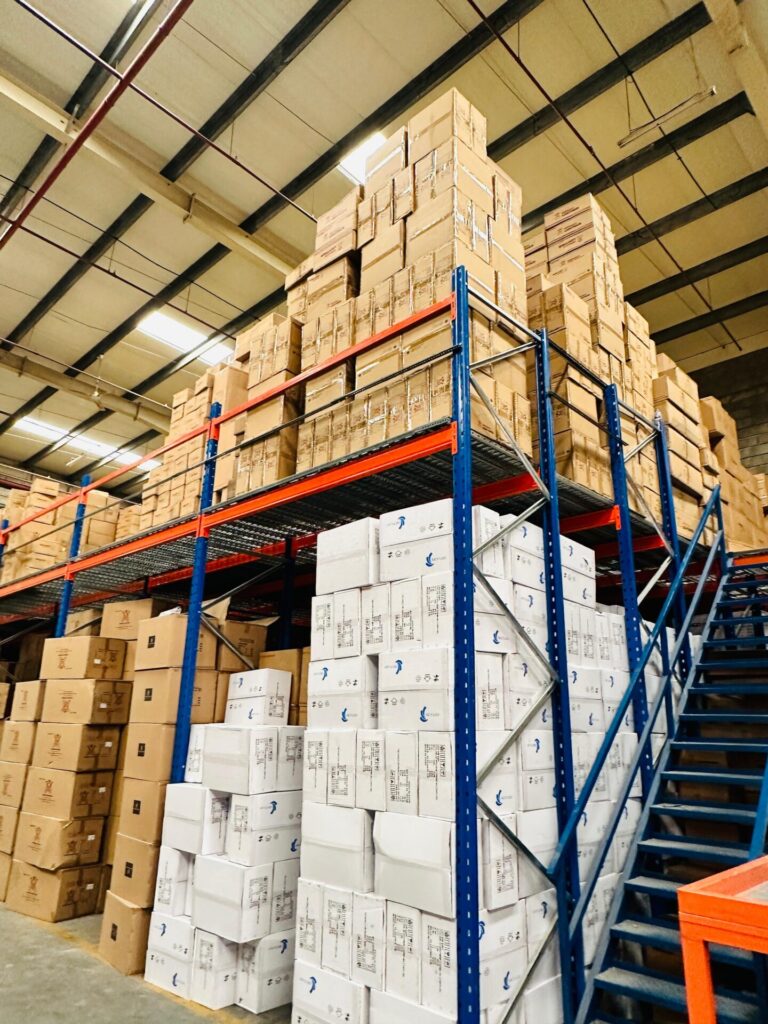
Growing businesses often reach a point where space becomes a major challenge. Inventory increases, teams grow, and daily operations need more room to run smoothly. Moving to a larger facility can be expensive, time-consuming, and disruptive. That’s why many companies are turning to mezzanine floors as a practical and cost-effective solution.
A mezzanine floor is an intermediate floor installed within an existing building. Instead of expanding outward, it makes use of the vertical height already available. This simple concept can transform unused overhead space into valuable storage, office, or production areas.
What is a Mezzanine Floor?
A mezzanine floor is a raised steel platform built between the ground floor and the ceiling of a warehouse, factory, or commercial building. It creates an additional level without major construction work.
Think of it as adding a new floor inside your building without changing the building’s structure. Mezzanine floors are usually modular, meaning they can be installed quickly, modified later, or even relocated if needed.
They are commonly used in warehouses, retail stores, factories, offices, and distribution centers where space optimization is essential.
Why Businesses Install Mezzanine Floors
As companies grow, space requirements increase. A mezzanine floor helps solve this challenge in multiple ways.
Maximize Vertical Space
Most industrial buildings have high ceilings. Without a mezzanine, that vertical space remains unused. Installing a mezzanine turns empty air into functional workspace.
Reduce Expansion Costs
Relocating to a bigger building involves high costs such as rent, construction, and downtime. A mezzanine floor provides extra space at a fraction of the cost.
Improve Workflow
With multiple levels, businesses can separate operations such as storage, packing, offices, or production. This improves efficiency and reduces congestion.
Quick Installation
Unlike traditional construction, mezzanine floors can be installed in a short time with minimal disruption to daily operations.
Types of Mezzanine Floors
Different industries require different mezzanine designs. Here are the most common types:
Structural Mezzanine Floor
A free-standing platform supported by steel columns. It is strong and designed for heavy loads.
Best for: Manufacturing, heavy storage, and industrial facilities.
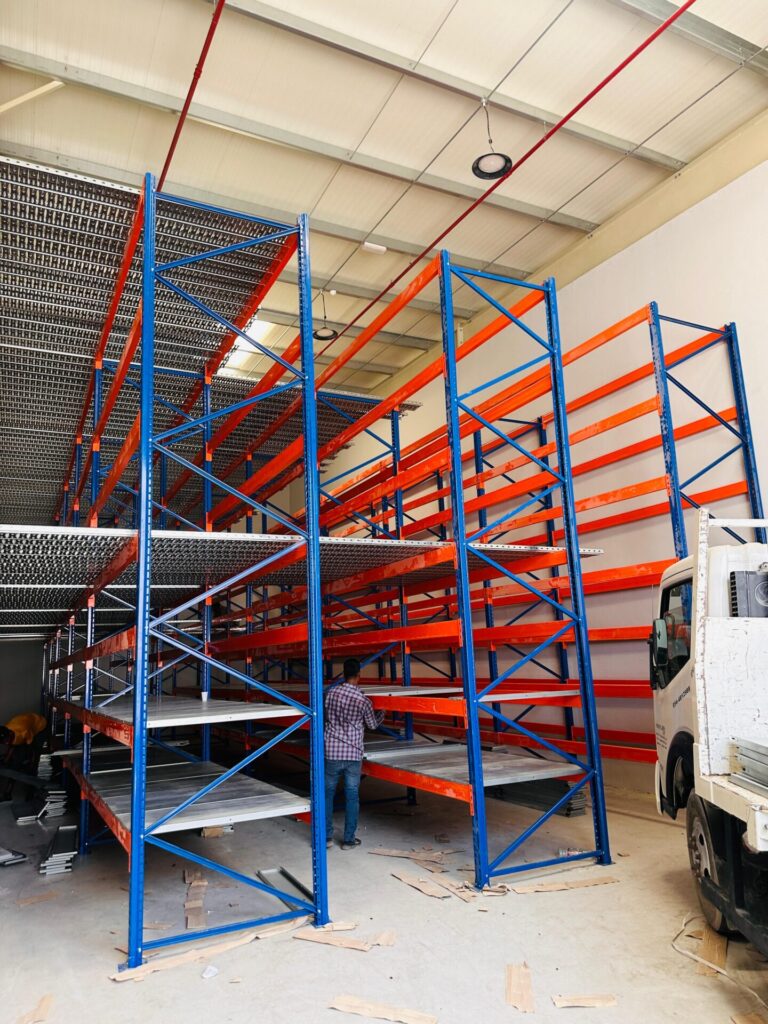
Rack Supported Mezzanine
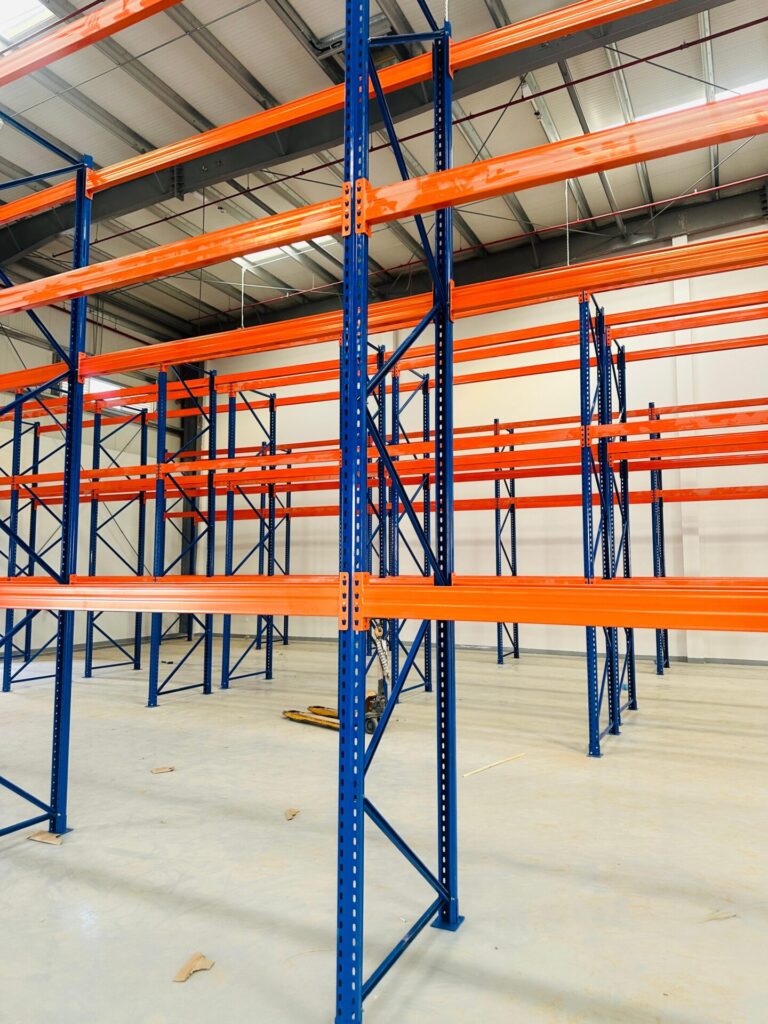
Built using pallet racks as the supporting structure. This combines storage and floor space in one system.
Best for: Warehouses with palletized goods.
Shelving Supported Mezzanine
Shelving units support the floor instead of racks or columns.
Best for: E-commerce businesses and small item storage.
Multi-Tier Mezzanine
Creates two or more levels inside the building, multiplying storage capacity.
Best for: Businesses that need maximum space utilization.
Key Components of a Mezzanine Floor
A mezzanine system is carefully engineered for safety and durability. Major components include:
- Steel columns and beams
- Floor decking panels
- Staircases and access ladders
- Handrails and guardrails
- Safety gates for loading areas
- Lighting and electrical integration (if required)
Each component is designed according to load capacity and operational needs.
Industries That Benefit from Mezzanine Floors
Mezzanine floors are widely used across many industries because of their flexibility.
Warehousing and Logistics
Helps manage increasing inventory while avoiding relocation.
E-commerce and Retail
Creates space for order picking, packing stations, and stock storage.
Manufacturing
Provides additional room for assembly lines, machinery, or offices.
Automotive and Spare Parts
Ideal for storing thousands of small components efficiently.
Office and Commercial Spaces
Can be used to create office cabins, meeting rooms, or staff areas.
Benefits of Installing a Mezzanine Floor
Increase Usable Space
A mezzanine floor can double or even triple the available floor area without expanding the building.
Better Organization
Different levels can be dedicated to specific tasks, improving productivity and workflow.
Flexible and Expandable
Mezzanine floors are modular and can be expanded or modified as the business grows.
Cost-Effective Investment
It offers a high return on investment compared to relocation or building expansion.
Reusable and Relocatable
If the business moves, the mezzanine structure can often be dismantled and reinstalled.
Safety Considerations
Safety plays a vital role in mezzanine floor design. Professional installation ensures compliance with safety standards.
Important safety features include:
- Anti-slip flooring
- Guardrails and handrails
- Load capacity signage
- Fire safety compliance
- Safe pallet loading gates
With proper planning and design, mezzanine floors provide a safe working environment.
Is a Mezzanine Floor Right for Your Business?
If your facility has high ceilings and limited floor space, a mezzanine floor could be the perfect solution. Businesses experiencing growth, increased inventory, or workflow congestion can benefit significantly.
It allows companies to expand operations without the stress and cost of moving to a new building.
Conclusion
A mezzanine floor is more than just an extra platform—it is a smart strategy for business growth. By utilizing vertical space, companies can increase capacity, improve workflow, and reduce expansion costs.
Instead of worrying about limited space, businesses can focus on productivity and future growth. With the right design and installation, a mezzanine floor can transform any warehouse or facility into a more efficient and organized environment.